
Award Recipient Showcase

The MEMIC Safety Research Center was established to fund evidence-based strategies that reduce injuries and improve outcomes for both employers and their workforce. As workplace environments continue to change, MEMIC remains committed to leading with research, innovation, and partnerships that elevate safety standards nationwide.
2025: University of Cincinnati

The MEMIC Safety Research Center has awarded its 2025 workplace safety research grant to the University of Cincinnati for a study focused on improving ergonomic conditions for long‑term healthcare workers. Led by Dr. Kermit Davis, Professor and Division Director of Environmental and Industrial Hygiene, the research will use wearable sensor technology to measure postural stress and physical demands experienced by nurses and nursing aides in long‑term care facilities. The goal is to generate objective data that can help reduce injury risk and improve safety for these essential workers.
The two‑year study will track posture and movement across multiple shifts using inertial measurement units and accelerometers, allowing researchers to identify patterns of strain and role‑specific ergonomic risks
Read the full press release | Visit site
2024: Oklahoma State University

The MEMIC Safety Research Center awarded its 2024 workplace safety research grant to Oklahoma State University to support the development of virtual reality training designed to prevent serious injuries in manufacturing and construction. Led by Dr. Diana Rodriguez Coca and Dr. Leslie Rex Stockel from OSU’s Fire Protection and Safety Engineering Technology department, the research focused on reducing “Line of Fire” incidents—hazardous situations where workers are struck by or caught between equipment due to their positioning.
Using immersive virtual environments, the research allows hazardous scenarios to be studied without risk to participants while generating data that can be translated into practical training tools.
Read the full press release | Visit site
2023: Illinois State University

The MEMIC Safety Research Center awarded its 2023 workplace safety research grant to Illinois State University to study how wearable sensor technology can help reduce injuries and improve performance in warehouse environments. The research, led by James R. Jones, Executive Director of Illinois State University’s Katie School of Insurance and Risk Management, and principal technical investigator Dr. Tice Sirmans, focused on using real‑time movement and fatigue data to better understand ergonomic risks faced by warehouse workers.
By examining how wearable sensors can provide continuous feedback to inform training programs and injury‑prevention strategies, the research addresses common musculoskeletal and overexertion injuries in one of the nation’s largest labor sectors.
Read the full press release | Visit site
2021: Indiana University of Pennsylvania
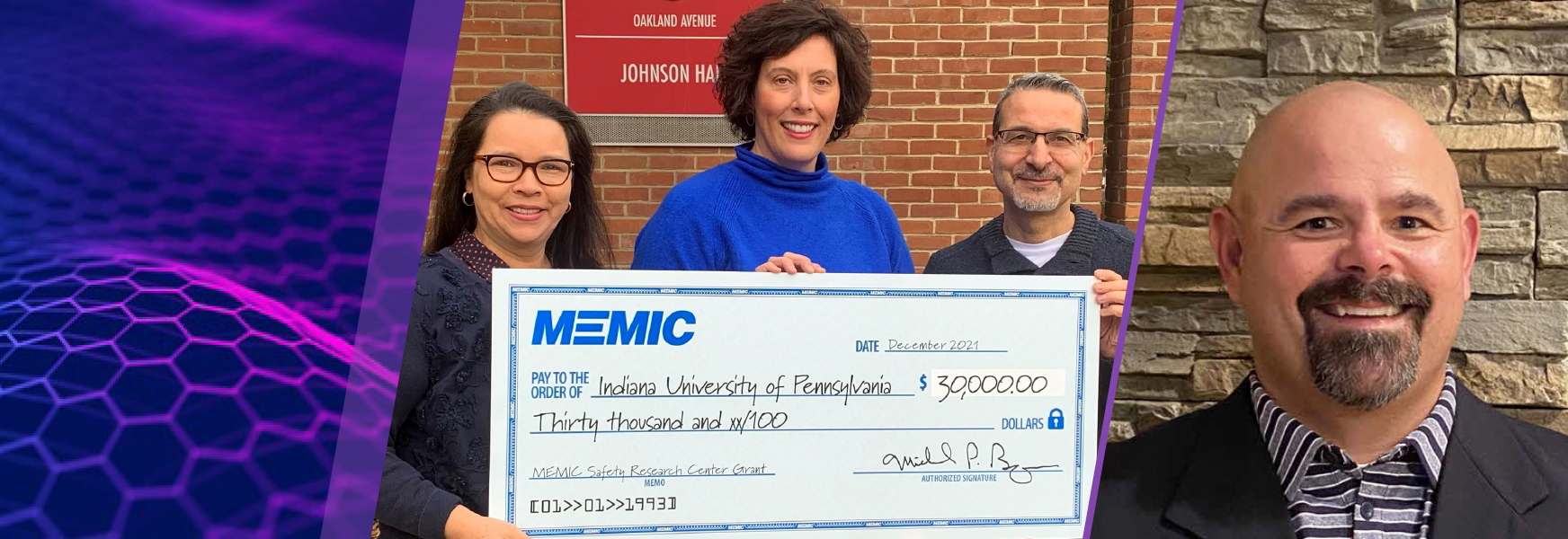
The MEMIC Safety Research Center awarded its inaugural workplace safety research grant in 2021 to Indiana University of Pennsylvania’s Department of Safety Sciences to study ways to reduce workplace slips, trips, and falls. The $30,000 project was led by Dr. Wanda Minnick, with co‑investigators Dr. Luz Stella Marin and Dr. Majed Zreiqat, and addresses one of the most common and costly causes of workplace injuries, particularly in construction environments.
Using simulated construction surfaces in a laboratory setting, the research team analyzed walking biomechanics and balance using wearable devices and motion‑tracking technology to better understand how workers adapt to hazardous conditions.
Read the full press release | Visit site
Proposal Submission
Submissions for the 2026 grant award are now closed. Winners will be notified in May, with an official announcement to follow in June.
Thank you to all those who submitted a proposal.
Research Center News
 January 28, 2026 | MEMIC Launches 2026 Safety Research Grant Program
November 22, 2024 | MEMIC Safety Research Center Opens Applications for 2025 Research Grants
August 21, 2023 | MEMIC seeks workplace safety research proposals
 July 19, 2022 | MEMIC Safety Research Center Now Accepting Proposals for 2022 Grant